AI and Jobs: Opportunities Behind the Headlines
AI's impact on jobs isn't all doom and gloom. From productivity boosts to new career paths, understanding AI's real effects can help you prepare for opportunities in the evolving workforce.
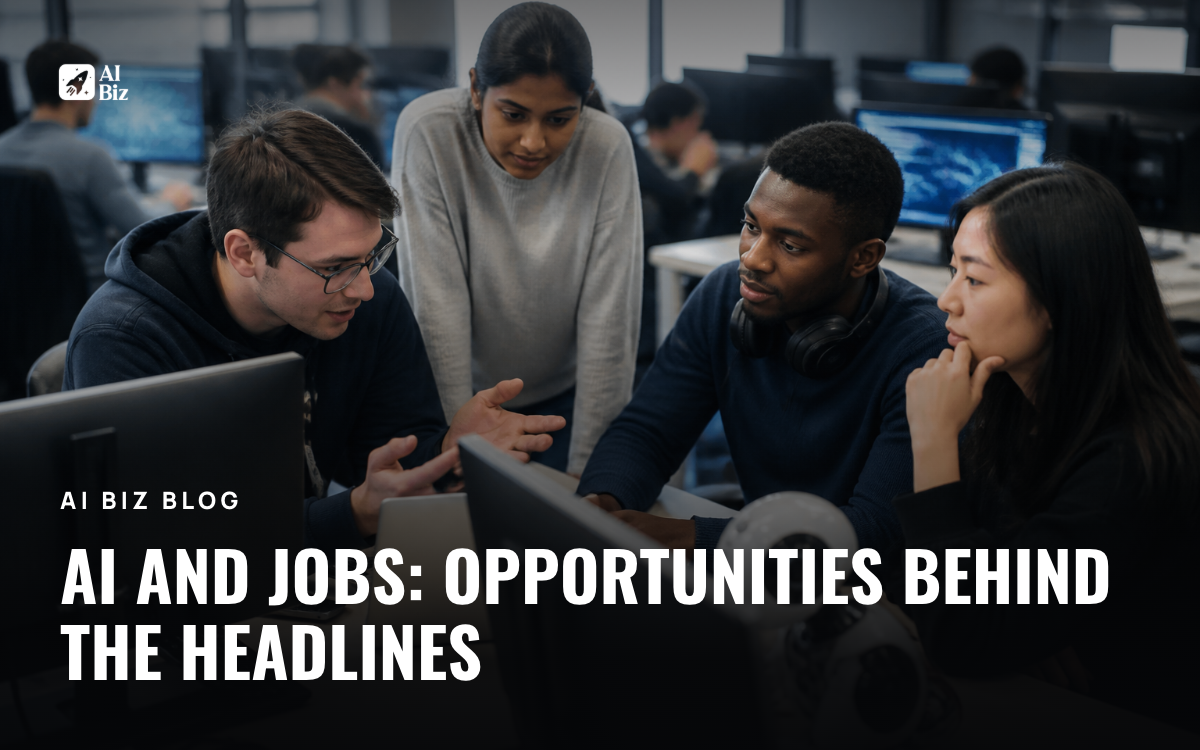
If you’ve been scrolling through the news lately, you’ve probably seen headlines predicting a bleak future for jobs due to AI. Words like "disruption," "apocalypse," and "job loss" are thrown around like confetti. But is it really that bad? Let’s break it down and look at what’s actually happening.
First, AI’s impact on overall employment right now is limited. Research shows that unemployment rates across jobs most exposed to AI, like coding and data-heavy roles, aren’t rising significantly faster than those in less-exposed industries. For example, unemployment for AI-exposed workers increased by 0.77 percentage points since 2022, while less-exposed workers saw a slightly higher increase of 0.85 points. These numbers suggest a generally soft labor market rather than a specific AI-driven collapse.
In fact, job postings for AI-related roles are growing. Despite fears, demand for software developers and other tech-heavy positions has risen faster than for other occupations over the last year. Firms adopting enterprise AI have also seen employment growth—on average, a 10 percent increase within two years. Companies investing heavily in AI often expand their workforce to support new systems and innovations.
So, what does this mean for you as a student preparing to enter the workforce? It means AI isn’t just taking jobs; it’s changing them. Instead of simply replacing roles, AI is shifting how work gets done. For example, many businesses are using AI to automate repetitive tasks, freeing up employees to focus on higher-value projects. This opens opportunities for jobs that require creativity, strategic thinking, and problem-solving—skills AI can’t master.
AI is also making workers more productive. Think about how tools like ChatGPT can speed up research, drafting, and coding. These tools don’t eliminate roles; they make them more efficient. In many cases, employees who learn to work alongside AI tools become more valuable to their teams and companies.
Of course, this doesn’t mean AI has zero impact. Some industries are feeling the pinch, especially jobs tied to routine processes. If you’re in a field like customer service or data entry, you’ve probably seen automation creeping into certain tasks. But even here, it's not all bad news. These shifts create demand for professionals who can manage, improve, or integrate AI systems into existing workflows.
The big takeaway is that AI adoption is uneven across industries. While some sectors are diving into AI headfirst, others are slower to adapt. For instance, healthcare and education are exploring AI cautiously, while tech and finance are moving faster. This uneven rollout means the impact on jobs varies—and so do the opportunities.
AI’s influence also creates a ripple effect, generating entirely new fields and positions. From AI ethics consulting to machine learning operations (MLOps), there’s a growing need for roles that didn’t exist a few years ago. These careers require a mix of technical and business expertise, making them ideal for students with interdisciplinary skills.
So, how can you prepare for this evolving job market? Start by building a solid foundation in AI basics. You don’t need to be a coding wizard to understand AI; tools like Python, TensorFlow, or even Excel-based machine learning can help you get hands-on experience. Pair this with business knowledge, like understanding how AI drives decision-making or improves customer experiences.
Networking is also key. Join organizations like UT Dallas’s AI Biz Club, where you can connect with peers, learn from industry professionals, and experiment with AI projects. These experiences will help you stand out when applying for internships or jobs.
Finally, stay adaptable. The AI landscape changes quickly, and so will the skills companies look for. Keep learning, whether it’s through online courses, workshops, or campus events. The more willing you are to grow, the more opportunities you’ll find in an AI-driven world.
AI isn’t the end of jobs—it’s the evolution of them. By understanding its real impacts and preparing strategically, you can position yourself to thrive in this changing environment. Instead of fearing the headlines, use them as a call to action. The future of work isn’t coming; it’s already here. It’s up to you to make the most of it.
REFERENCE MATERIAL:
NOTES This article draws insights from Stanford Institute for Economic Policy Research’s brief on AI’s current impact on the labor market. Key takeaways include AI’s small influence on overall employment, its mixed productivity effects, and uneven adoption across industries.
SOURCE https://siepr.stanford.edu/publications/policy-brief/what-really-happening-jobs-separating-ai-hype-reality