
How AI is Helping Nature Make a Comeback
AI is revolutionizing environmental restoration with tools that analyze ecosystems, support conservation, and even explore species revival. Students can learn how this tech is shaping sustainable solutions and green careers.
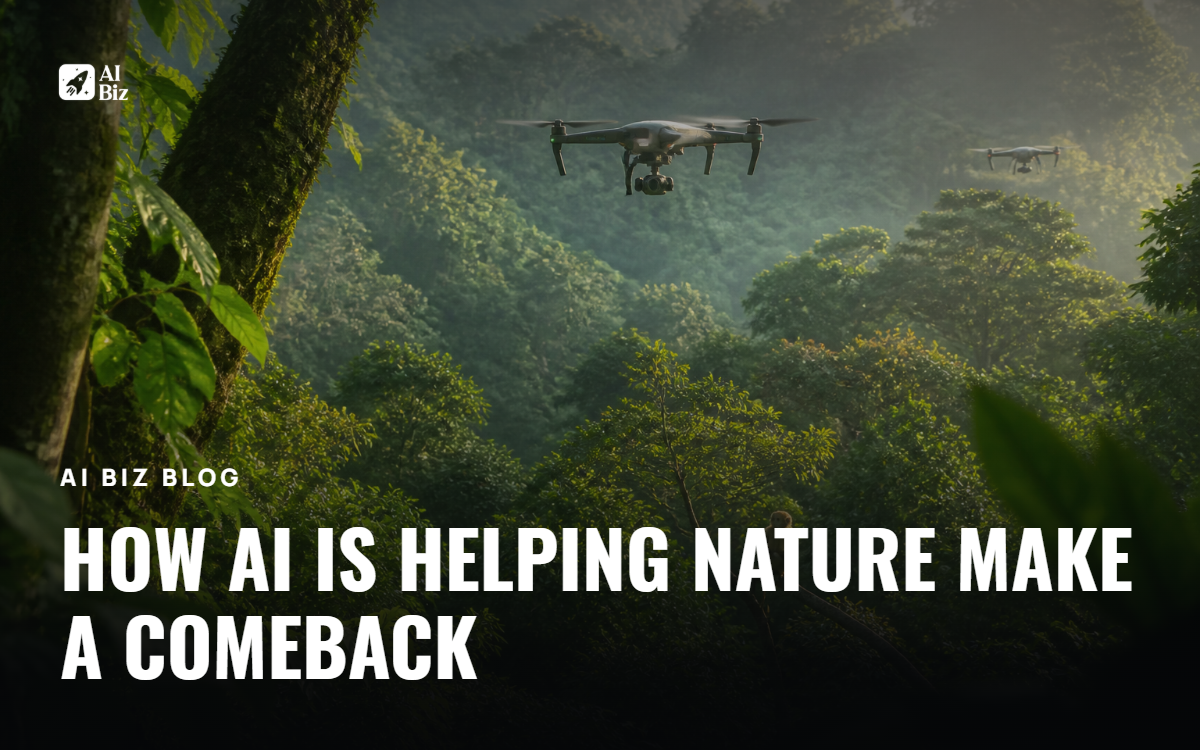
Artificial intelligence is no longer just about optimizing supply chains or training chatbots. Today, it is stepping into the natural world, driving efforts to restore ecosystems, protect endangered species, and even explore the revival of extinct animals. For students interested in sustainability, technology, or both, this intersection of AI and environmental restoration opens up exciting opportunities to make a real-world impact.
### How AI is Changing Environmental Projects
AI has become a powerful tool in conservation by processing vast amounts of data faster and more accurately than humans ever could. For example, machine learning models can analyze satellite images to track deforestation or monitor coral reef health. These tools can also predict the spread of wildfires or invasive species, enabling quicker, more effective responses.
But AI is not just about observation and prediction. It is also being used to actively engineer solutions. One standout example is the work being done to combat climate change through carbon capture technologies. AI helps optimize these systems by modeling how different designs interact with environmental conditions, making them more efficient.
Another emerging area is the use of AI in biodiversity restoration. By analyzing genetic and ecological data, AI can help scientists identify strategies to reintroduce or protect species in fragile ecosystems. This is where AI meets synthetic biology, a field that is pushing boundaries in ways that were once considered science fiction.
### Case Studies of AI in Action
One of the most talked-about companies in this space is Colossal Biosciences. Their mission is as bold as it gets: using AI and synthetic biology to bring back extinct species like the woolly mammoth. The idea is not just to revive these animals for curiosity's sake but to use them as tools for ecosystem restoration. For instance, reintroducing mammoths to the Arctic tundra could help combat climate change by transforming the landscape into a carbon-capturing grassland.
Another example comes from conservation organizations using AI to monitor endangered species in the wild. Tools like drones equipped with computer vision are deployed to track animal populations without disturbing their habitats. In marine environments, similar technologies are used to map coral reefs and assess their health. These AI-driven approaches are faster, cheaper, and less invasive compared to traditional methods.
Even urban areas are benefiting from AI-powered environmental efforts. Cities are using AI to design green infrastructure like parks and rain gardens that better manage stormwater and improve air quality. By simulating various scenarios, AI helps planners maximize environmental benefits while staying within budget.
### The Challenges and Limitations
Despite its promise, using AI for environmental restoration is not without challenges. Data is one of the biggest hurdles. For AI to work effectively, it needs high-quality, comprehensive datasets, which are often difficult to obtain in remote or under-researched ecosystems.
Cost is another factor. While AI tools can save time and resources in the long run, the upfront investment in technology, training, and infrastructure can be a barrier, especially for smaller conservation groups.
Finally, there are ethical and philosophical questions to consider. Should we focus on reviving extinct species when so many existing ones are at risk of disappearing? Does engineering nature distract from the urgent need to protect what we already have? These debates are far from settled and will likely shape how AI is used in conservation moving forward.
### Implications for Future Careers
If you are a student wondering how this applies to you, here is the exciting part: the skills needed to work at the intersection of AI and environmental science are in high demand. Whether you are studying computer science, biology, or business, there are roles for strategists, data analysts, policy experts, and engineers in this field.
For example, companies like Colossal Biosciences are not just hiring biologists and geneticists. They also need AI specialists to develop machine learning models, project managers to oversee complex initiatives, and business professionals to navigate funding and partnerships. Similarly, conservation organizations are looking for tech-savvy individuals who can help implement AI tools in the field.
The growing focus on sustainable technology means these opportunities are only going to expand. If you are passionate about making a difference, now is the time to start exploring how your skills can contribute to this important work.
### A Future Where AI and Nature Work Together
AI is not a silver bullet for solving environmental challenges, but it is a tool with immense potential. By combining advanced technology with ecological knowledge, we can create innovative solutions that were unimaginable even a decade ago. For students and professionals alike, this is a chance to be part of a movement that is not just about preserving the planet but actively restoring it.
As AI continues to evolve, so will its applications in environmental restoration. The key is to approach these opportunities with a mix of curiosity, responsibility, and collaboration. Whether it is through developing cutting-edge algorithms or advocating for ethical practices, there is room for everyone to contribute to a more sustainable future.