Quantum Computing and AI: A Future Closer Than You Think
Quantum computing and AI are gearing up to transform industries, solving problems far beyond the reach of classical methods. Students need to grasp their potential and limitations to stay ahead in tech-driven business.
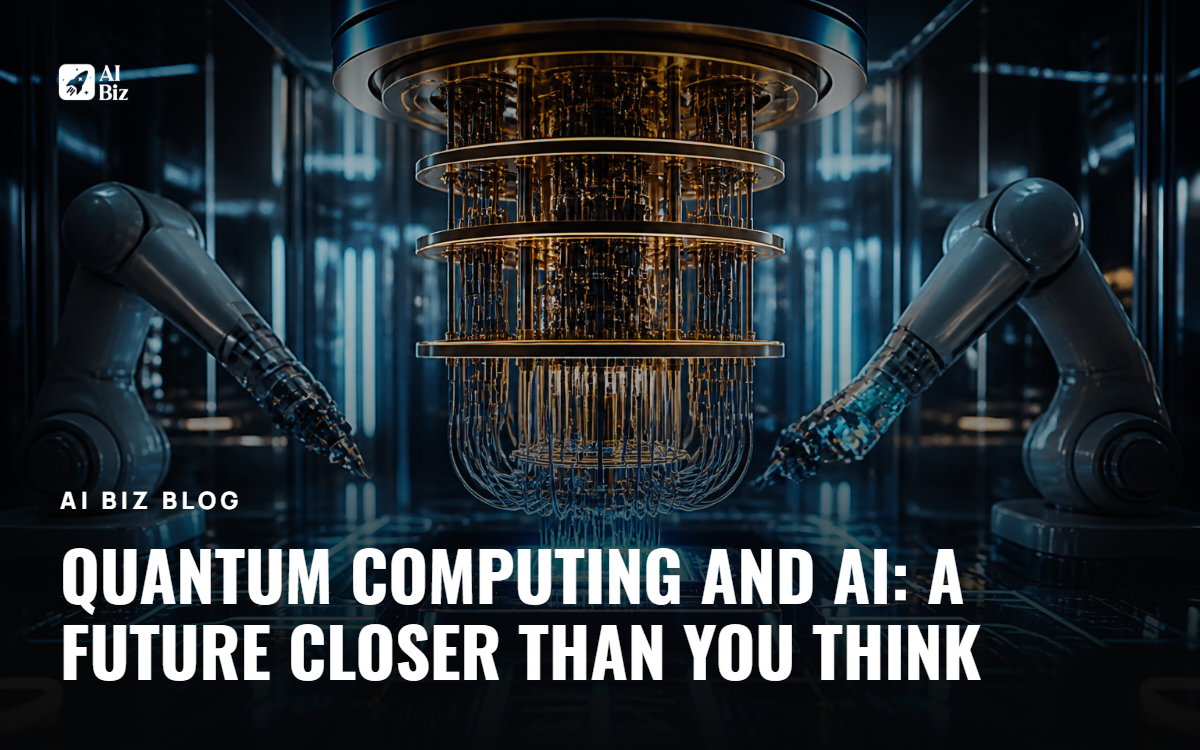
Quantum computing and artificial intelligence are two of the most buzzworthy technologies today. While both are individually groundbreaking, their combination could lead to paradigm-shifting solutions across industries. Though quantum-powered AI may sound like something from a sci-fi movie, it is closer to reality than you might think. For students in business and tech, understanding this intersection is crucial to staying ahead in tomorrow’s job market.
Let’s start with the basics. Quantum computing goes beyond traditional computers by leveraging the principles of quantum mechanics. Classical computers process information in binary—ones and zeroes—while quantum systems use qubits, which can represent multiple states simultaneously. This ability to process vast amounts of data in parallel makes quantum computing ideal for solving complex problems that are infeasible for classical computers.
AI, on the other hand, thrives on data and computation. Machine learning algorithms analyze patterns, predict outcomes, and make decisions based on massive datasets. But as AI models grow in complexity, they require even more computational power. This is where quantum computing steps in. By dramatically speeding up calculations, quantum systems can enhance AI’s ability to tackle problems like optimization and simulation.
One key area where quantum computing could revolutionize AI is optimization. Businesses face optimization challenges every day, from supply chain management to portfolio allocation. Classical methods often struggle to find ideal solutions when the number of variables skyrockets. Quantum computing’s capability to evaluate multiple possibilities simultaneously could enable AI to identify optimal solutions faster and more accurately. For example, logistics companies could use quantum-powered AI to plan delivery routes that minimize costs while maximizing efficiency.
Another promising use case lies in simulation. Industries like pharmaceuticals and materials science rely heavily on simulations to predict how molecules or materials will behave under certain conditions. Quantum computing can handle the complex calculations required for these simulations, enabling AI to generate more precise models. This could lead to breakthroughs in drug discovery or the development of advanced materials for renewable energy.
Despite the excitement, quantum-powered AI is not without challenges. First, quantum computing technology is still in its infancy. Current systems are expensive, difficult to maintain, and prone to errors due to quantum decoherence. Researchers are working on improving stability and scalability, but widespread adoption is likely years away.
Second, integrating quantum computing with AI requires specialized expertise. The algorithms used in quantum systems are fundamentally different from those used in classical computing. Students entering tech or business fields will need to learn new skills to leverage these tools effectively. Additionally, ethical and regulatory concerns surrounding AI will only grow as quantum technology accelerates its capabilities.
So, where will we see quantum-powered AI making an impact first? Industries that rely on complex calculations and large datasets are likely to benefit early. Finance, healthcare, logistics, and energy are strong contenders. For example, financial institutions could use quantum AI to run risk assessments and optimize investment strategies. In healthcare, AI-powered simulations could speed up drug trials and reduce costs. Energy companies might use quantum systems to model the behavior of renewable resources, improving efficiency and sustainability.
For students, the implications are clear. Gaining expertise in quantum computing and AI could open doors to cutting-edge careers. But it’s equally important to understand their limitations. Getting swept up in the hype without acknowledging the current challenges can lead to unrealistic expectations. Focus on developing a practical understanding of these technologies and their real-world applications.
Quantum-powered AI solutions may not be fully operational today, but the foundation is being laid. By keeping an eye on advancements, learning the necessary skills, and thinking critically about their business implications, students can position themselves to lead in this transformative era. The future isn’t just about technology—it’s about using it wisely.